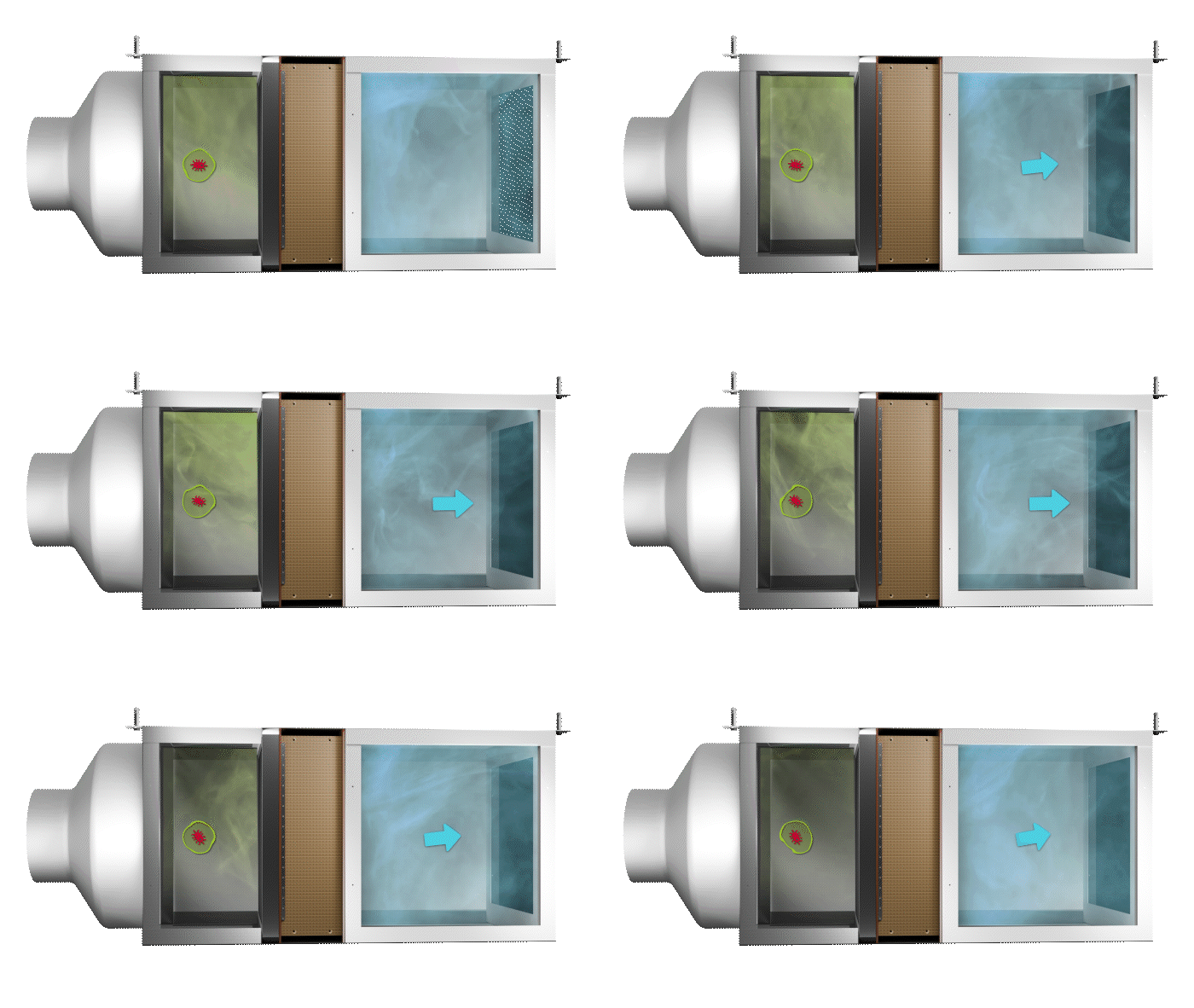
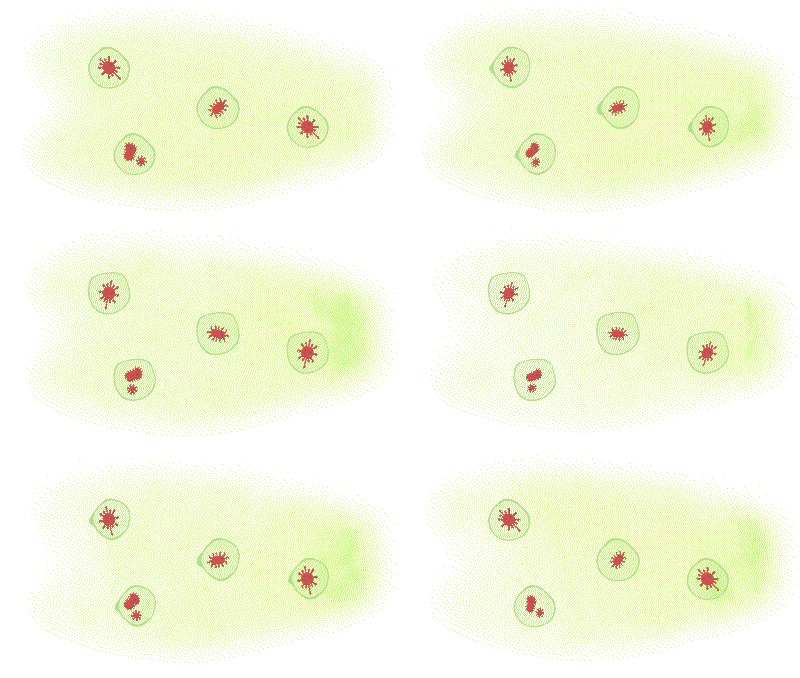
Our science begins with a natural truth - every microbe carries an electric charge called “zeta potential” (from where we got our name - ZeBox!) like its own fingerprint in the air.
Trap
Inside ZeBox, air passes through charged flat electrodes, creating a non-ionizing electric field that captures microbes.
Kill
The 3D-textured electrodes coated with microbicidal agents, destroy >99.999% of them through electric and chemical forces.
Why ZeBox is unique and better
Trap-and-kill, not just trap
Many systems only capture microbes (filters, electrostatic precipitators), leaving live germs that can regrow or be released. ZeBox destroys them.
Works in real time, continuously, even with people present
Because there is no harmful radiation or toxic emissions, ZeBox can operate safely even in occupied spaces - something UV or chemical-based systems cannot confidently claim.
Low energy and low air resistance
Unlike dense HEPA filters (that resist airflow, need strong fans), ZeBox’s airflow is nearly parallel to its kill-surfaces - so it needs little energy while still treating air effectively.
Broad-spectrum and robust
Works on bacteria, viruses, fungi, spores - sensitive or tough - with roughly similar efficiency across the board.
No harmful by-products
Because it uses a non-ionizing field and a chemical kill-surface, it avoids the ozone, radicals, gases common in ionizing, plasma or PCO systems.
ZeBox’s breakthrough technology has been validated through peer-reviewed research and extensive testing – marking it as one of the world’s most advanced air-decontamination systems.