The Monsoon Moves Indoors: Humidity, Mould and the Air in Indian Homes

The first sign is not always a black patch on the wall. Sometimes it is a cupboard that smells different, a bedroom that never quite dries, or an air conditioner that has begun to feel musty.

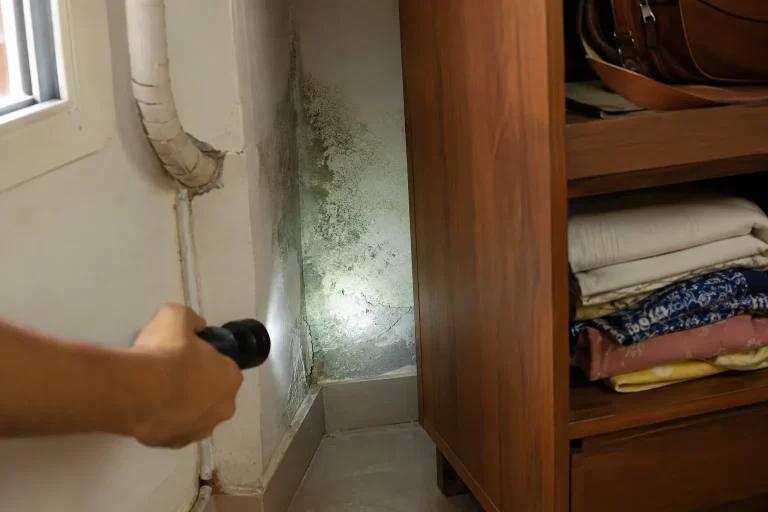
Mould growing on a damp wall behind a wardrobe

By the middle of the monsoon, a home begins to behave differently. Towels take longer to dry. The back of a wardrobe feels cool and faintly damp. Shoes develop a smell. Condensation appears near an air-conditioning vent. None of these changes seems dramatic on its own, but together they describe a building that is holding more moisture than it can comfortably release.

That matters because persistent moisture creates the conditions in which mould and other microorganisms can grow on paint, plaster, wood, fabric, dust and hidden building materials.

Humidity is only part of the story

Relative humidity tells us how close the air is to saturation at a particular temperature. Warm air can hold more water vapour than cool air. When moist air meets a cooler wall, window, pipe or air-conditioning surface, the local temperature may fall below the dew point and water condenses.

This is why a room can show an acceptable average humidity while a cold corner behind furniture remains wet enough for growth. Leaking plumbing, seepage through external walls, roof damage, poorly drained air conditioners and bathrooms without exhaust can make the problem worse.

Why mould is an air-quality issue

Mould does not remain confined to the stain we can see. Growth can release spores, fragments and microbial volatile compounds into indoor air. The World Health Organization’s guidance on dampness and mould links damp buildings with increased respiratory symptoms, allergies and asthma. Individual responses vary: some people develop irritation or allergic symptoms, while others may notice little.

People with asthma, significant allergies or weakened immune systems may require more cautious assessment. Suspected extensive mould, recurring dampness or contamination of porous building materials is a reason to involve an experienced professional rather than repeatedly painting over the surface.

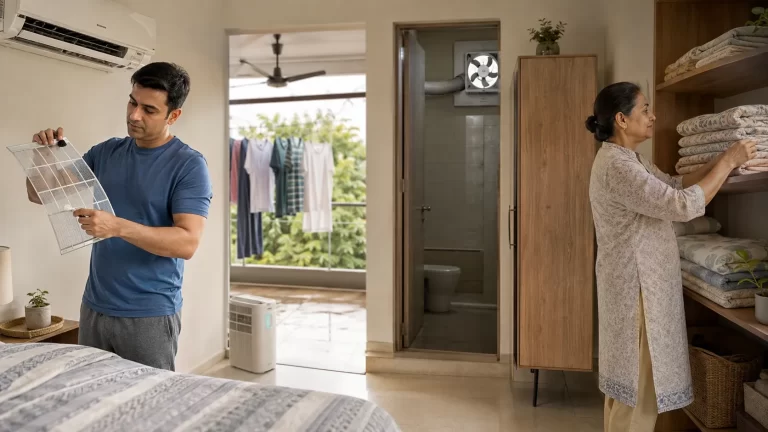
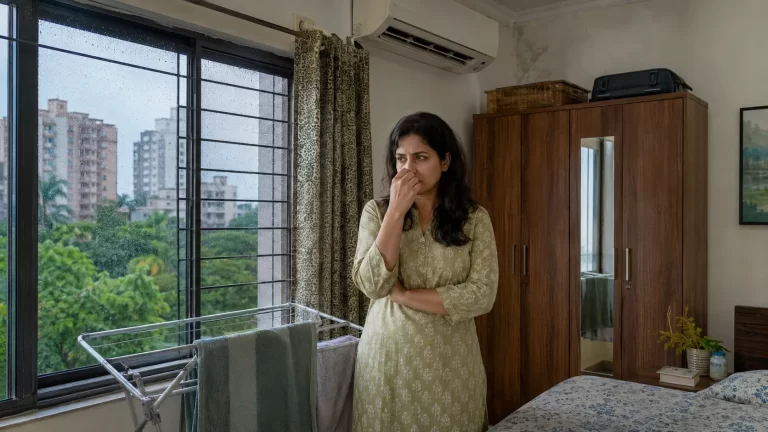
Woman in a damp bedroom with clothes drying indoors during monsoon

The monsoon inspection: ten minutes per room

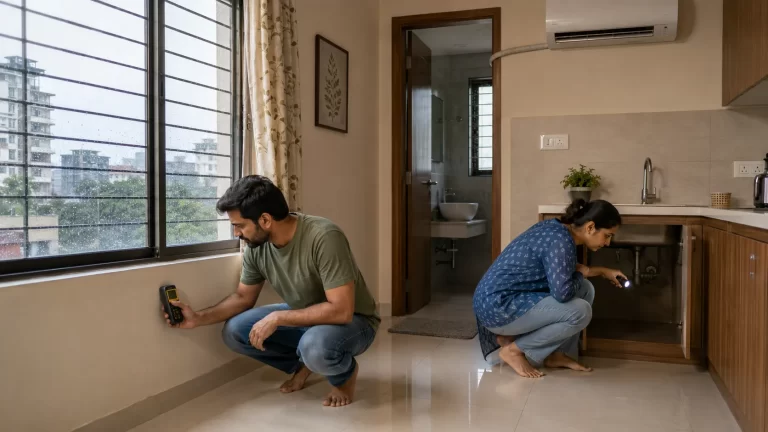
Walk through the home slowly, preferably in daylight. Smell is often an early clue. Check behind beds and wardrobes placed against external walls. Look under sinks, around window frames, beside bathroom ceilings and near AC drain lines. Feel stored fabrics and examine leather items. Check whether exhaust fans actually discharge outdoors.

A moisture meter can help investigate a suspicious wall, but it is not essential for noticing a pattern. The key question is not only “where is the mould?” but “where is the water coming from?”

Couple checking walls and kitchen plumbing for moisture during monsoon

What to do before buying another device

  • Repair leaks and seepage. Drying the surface without stopping the source leads to recurrence.
  • Use kitchen and bathroom exhaust during moisture-producing activities and for a period afterwards.
  • Allow space between large furniture and cold external walls so air can circulate.
  • Dry wet fabrics promptly; avoid storing even slightly damp clothes, shoes or bedding.
  • Clean and maintain AC filters, coils and drain pans according to the manufacturer’s instructions.
  • Use a dehumidifier where persistent high humidity cannot be controlled by ventilation, especially when outdoor air is also very humid.
  • Ventilate when outdoor conditions are favourable, but recognise that opening windows during heavy rain may bring in more moisture.

Where an air cleaner fits

A suitable air cleaner may reduce some airborne particles, including spores that reach the device. It cannot dry a wall, repair a leak or remove growth embedded in a material. If the moisture source continues, the building will continue producing contamination.

For that reason, source control comes first. Air cleaning can be a supporting measure while the room is kept dry, cleaned appropriately and monitored for recurrence. Avoid deliberately ozone-generating devices in occupied homes; ozone is a respiratory irritant.

Family managing indoor humidity with AC maintenance and a dehumidifier

Cleaning small areas safely

For limited surface growth on a non-porous area, follow local public-health guidance, protect yourself from exposure and dry the area completely. Porous materials such as ceiling tiles, insulation or badly affected boards may need removal rather than surface wiping. Do not mix cleaning chemicals, and never combine bleach with acids or ammonia.

If the affected area is large, keeps returning, follows major water damage, or involves a person at high medical risk, obtain professional advice. The visual stain is often smaller than the moisture problem behind it.
A home that dries is a healthier home

Monsoon air cannot be controlled at the city level from inside one apartment. The moisture balance of the home can. Watch the cold corners, manage water at its source, maintain cooling equipment and use ventilation or dehumidification deliberately rather than automatically.

Mould control is moisture control. If the water problem remains, the air problem will return.

References and editorial sources

  1. WHO Guidelines for Indoor Air Quality: Dampness and Mould
  2. US EPA: Biological Contaminants and Indoor Air Quality
  3. US EPA: A Brief Guide to Mold, Moisture and Your Home